Pages

Tuesday, 19 February 2013

A Chat with Sarah Louise Smith


I have invited fellow Crooked Cat author Sarah Louise Smith to chat with me today. Sarah has recently published her first novel, the lovely chic-lit tale "Amy & Zach". 
 

Meet Amy & Zach
 
Amy has moved to the US in order to find her real father, but she hasn’t quite worked up the courage to do so yet.
 
Then she met Zach, who swept her off her feet. They fell in love, fast. But Zach has a secret with the potential to ruin everything.
 
As Amy prepares to return to England for her sister Libby’s wedding, Zach drops a bombshell. Amy is furious, so she hides his passport and flies alone. But Zach’s secret isn’t her only worry. She will see Tim again – her sister’s fiancé.
 
After he finds his passport, Zach heads to the UK to surprise Amy. 

He wants to apologise and finally meet her family. He knows he has a lot of explaining to do. But just what will he face?
 
Amy & Zach take it in turns to share their tale with you. They will reveal all, and may surprise you, in the end... 


Hello, Sarah, and thank you for talking to me today. 
Thank you for having me.
 
Tell us a little about your writing journey, when you started and how you got to publish your first novel, “Amy & Zach”.
I have been writing stories since I was a child, and it was always a dream to just complete a novel, let alone have it published. Once I’d finished, I started approaching agents and publishers and lucky for me, Crooked Cat liked it and took me on.
  
“Amy & Zach”, published by Crooked Cat, follows two people as they meet, fall in love and get to know each other and their respective worlds. What inspired you to write the story? What is your personal experience with two different cultures coming together? 
I read a lot of different genres but my favourite has always been romantic comedy/chick-lit. I like a fun read and always prefer the first person narrative, so I decided to write something I knew I’d enjoy reading myself.
I used to work for a company whose HQ was in Boston, MA, and half of my teammates were based there, so I visited a couple of times and dealt with Bostonians regularly. This helped me to set the scene and have a good idea about the different cultures, etc. 

You chose to write the novel in the first person, alternating between the two main characters’ point of view. How did you find writing from two different perspectives?
I really wanted to let the reader know what the hero was thinking and feeling, as well as the heroine. It was difficult writing Zach’s point of view; partly because he’s American and I’m British, but also because he’s male! But I think it gives the story a bit more insight and allows the reader to get to know him as well as they do Amy. So it was difficult, but fun. 

What do you think makes a great chick-lit novel?
My favourite chick-lit author is Paige Toon and she ticks all the boxes for me; her novels are always in the first person, which, for me, means I really identify with the main character. Her novels are also fast-paced with serious issues and humour at the same time. I think chick-lit needs to be realistic, not too ‘fluffy’ and easy-going to read, with a happy, satisfying ending for that feel-good factor.

Like Amy, you are obviously an avid reader. What do you enjoy reading mostly? Which authors would you say influenced you as a writer?  
I read quite a variety of genres, but mostly chick-lit. As mentioned above, Paige Toon is my favourite, although I only started reading her recently so she didn’t influence my writing of "Amy & Zach". I also love Lisa Jewell and Marian Keyes.

Apart from writing and reading, what else do you enjoy doing?
Walking, I have a golden retriever so we go out most days. Travelling; I’m always counting down to my next holiday, and cooking – I’m an experimental cook, always looking for new recipes.

And finally, what’s cooking in your writing pot?
I’m currently working on my second novel, untitled as yet, which is a completely new story. A few people have asked me about an Amy & Zach sequel. I’d never planned one but after being asked, I’ve started to consider how that might go...watch this space!

Thanks for coming along. All the best with “Amy & Zach” and your future projects.
Thank you Michela! :)
   
"Amy & Zach" is available on Amazon in paperback and Kindle editions.

You can find Sarah on her  website


And on Twitter


Saturday, 16 February 2013

Tuesday, 5 February 2013

"Painter of Silence" by Georgina Harding


 Iasi, Romania, the early 1950s. A nameless man is found on the steps of a hospital. Deaf and mute, he is unable to communicate until a young nurse called Safta brings paper and pencils with which he can draw. Slowly, painstakingly, memories appear on the page. 

The memories are Safta's also. For the man is Augustin, son of the cook at the manor house which was Safta's family home. Born six months apart, they grew up with a connection that bypassed words. But while Augustin's world remained the same size Safta's expanded to embrace languages, society - and a fleeting love, one long, hot summer.

But then came war, and in its wake a brutal Stalinist regime, and nothing would remain the same. 

***
I was initially drawn to this book because of the protagonist's deafness, a topic that, as a mother of a deaf child, interests me on a personal level.

Augustin is a deaf mute and his only way of communicating with the world are his drawings, which he can detail down to perfection. We get to wander into his mind and see the world through his eyes and thoughts, and I came to really love this sensitive, childlike soul trying to make sense of a world he can't really fit in, as he watches big historical and social changes unfolding and turning his reality upside down.

The only person that ever was able to reach him, was his childhood friend, Safta. They live at opposite ends of the social spectrum, but somehow find a connection that life and history cannot break. Her strong, defying nature is complementary to Augustin's fragility.

The novel has a challenging structure, jumping as it does from present to past, switching tenses and points of view, but somehow it flows and the narrative is sewn together with great skill.


The historical and social settings serves as an interesting background in which to weave the story, as they mirror and shape the lives of the protagonists and the many other characters they meet on their way. 

If you like fast-paced stories, then this is not for you. If on the other hand you want to dive into a narrative you can slowly savour and absorb, this book will not disappoint you. There are beautiful passages and turns of phrase that stay with you and paint beautiful images, much like the title suggests.

Sunday, 2 December 2012

The Heidelberg of "Topaz Eyes" by Nancy Jardine

Today I'm happy to welcome on my blog fellow Crooked Cat author Nancy Jardine, whose historical romance The Beltane Choice, has received many praises and great reviews. Nancy has a new book out this week, "Topaz Eyes", an exciting mystery-romance novel. The story opens in the German town of Heidelberg and here Nancy tells us a little more about this lovely, historical town and why she chose it as one of the  settings for her book.

***  ***  *** 

The Heidelberg of Topaz Eyes

What is it about Heidelberg, Germany, that makes it an incredible destination to visit…and also to write about?

In my ancestral mystery - Topaz Eyes – I needed the initial location to be a European city that has great impact, yet doesn’t have too extensive a tourist centre: Heidelberg was perfect. Keira Drummond is familiar with the old town areas of the Aldstadt, and loved living there as a twenty-one year old student. Her enjoyment of the city itself hasn’t changed when she responds to a mysterious invitation to revisit at twenty-seven - it’s the people she meets that she’s not sure of. Finding herself involved in a family quest for long scattered jewels isn’t what she expected, but being an excellent tourist guide to Teun Zeger is something that’s no hardship.

What is there for Keira to show Teun on their tourist wanderings?

Here’s what I love about Heidelberg – some of which is included in Topaz Eyes.

On arrival at the Aldstadt –the old city- the sense of medieval history hits me immediately. The cobbled streets and the glorious old buildings, so many of which could be a story in themselves, are fabulous viewing.


The Renaissance style Alte Brucke (old Bridge) with its distinctive bridge gates – the Brukentor – is only one of many bridges straddling the River Neckar near Heidelberg. I absolutely love the black tower tops of the Brukentor, which seem reminiscent of the Pickelhaube helmets worn by Prussian soldiers during the nineteenth century. The white towers guard the city and are as imposing as the soldiers who would once have stood sentinel there.

Walk half way along the Alte Brucke and pause. There are the most fantastic views up and down the River Neckar from the old bridge itself, the steep banks opposite the city clothed in dense foliage, dotted at the lower reaches with white walls and red roofs. On a fine day it is easy to spend ages just looking…and admiring.

In the old city itself, a walk of a couple of hours gives you a glimpse of the main attractions. The pedestrianised streets around Bismarckplatz and Hauptstrasse are full of beautiful architecture - though if retail therapy is more your style you’ll find a wealth of distinctive and exciting shops to cater to those needs. The Baroque-style University buildings were of particular interest to me on one visit since my daughter was studying there, for a year, as part of her UK University languages course. (A reader of Topaz Eyes just might spot a parallel there.) A visit to the former students' prison at Jesuit's Church (Jesuitenkiche) is a highlight not to be missed – a tourist trap I gather most students drag their families to view.

A trek up the hillside or a short trip on the Bergbahn – funicular railway - takes you to the huge Heidelberg Castle, a jumble of buildings of different architectural styles.  The smallish apothecaries’ museum is fascinating and just had to be included in Topaz Eyes. 


If you’re interested in a nice hike up a steep hill then a trip to the Philosophenweg – The Philosopher’s Walk – is a great way to spend an afternoon, the vistas from various outlook levels are fantastic as you climb higher and higher.

This is just a taster to the many attractions of Heidelberg. If you’re interested in finding out more about the other cities I’ve used in Topaz Eyes you’ll find me guest posting in other blogs about Vienna, Amsterdam, Duluth and Rochester (Minnesota USA), and Edinburgh. Please check out my blog http://nancyjardine.blogspot.com for the other blog tour URLs.


Thank you for inviting me to be your guest today, Michela. It’s been my pleasure to highlight a few of the special places in Heidelberg, a city that will always mean a lot to me.


TOPAZ EYES

 A peculiar invitation to Heidelberg embroils Keira Drummond in the search for a mysterious collection of extraordinary jewels once owned by a Mughal Emperor; a hoard that was last known to be in the possession of Amsterdam resident, Geertje Hoogeveen, in 1910.

Who among the progeny of Geertje – hitherto unfamiliar third cousins brought together for the quest – can Keira rely on? Distrust and suspicion among them is rife.

Which one is greedy, and determined enough, to hire thugs to tail her… and worse… as she travels to Vienna and Minnesota?  Can Keira even trust Teun Zeger - a Californian she is becoming very drawn to – as they pair up to unearth the jewellery?

As they follow a trail of clues, will they uncover the full collection before the hired gun kills them? Details remain furtive and undisclosed until danger and death forces their exposure. And who harbours the ultimate mystery item that is even more precious than the Mughal jewels?

Greed, suspicion and murder are balanced by growing family loyalty, trust, and love.


“Would you ditch the mystery, Jensen, and just enlighten me as to what you think I have that interests you? And tell me why you couldn’t have asked for it in the letter you sent to me? I came here of my own free will – granted – but I’m not hanging around any longer if you’re going to drag this out, for I’m damned sure I’ve no idea what you’re referring to.”
            Jensen’s reply lacked emotion, his face a blank screen, his gaze focused on Teun as Keira regarded the by-play.
            “Teun. It may come as a surprise to you, but you actually know more about this invitation than Keira. At least you knew from my letter I had something of family interest you might be glad to take back to the USA with you. Keira had no such suggestion made to her.”
            Tension rose in the room, which didn’t only radiate from Teun.
            Keira sat uneasy, also unwilling to be in the dark any longer. “Would you please explain why you think I may have something you want, Herr Amsel?” She found herself reluctant to use his first name, considering the antagonism now mounting.
            “All in good time, Keira. And please call me Jensen. I don’t set out to be anyone’s enemy. I believe each of you can provide access to items belonging to the collection. All the pieces are likely to vary in monetary value but, viewed as a complete entity, it will make an impressive display. It’s a historic set… and unique.”


Topaz eyes will be available in print and e-book formats from 7th December from: www.crookedcatbooks.com


An ex-primary teacher, Nancy Jardine, lives in the fabulous castle country of Aberdeenshire, Scotland. Her husband mans the kitchen, her offspring only an hour’s drive away. When time permits, ancestry research is an intermittent hobby. Neglecting her large garden in favour of writing, she now grows spectacularly giant thistles. Activity weekends with her extended family are prized since they give her great fodder for new writing.

A lover of history, it sneaks into most of her writing along with many of the fantastic world locations she has been fortunate to visit. Her published work to date has been two non fiction history related projects; two contemporary ancestral mysteries; one light-hearted contemporary romance mystery and a historical novel, The Beltane Choice, also published by Crooked Cat Publishing.


Nancy's Blog

Nancy's website  


Follow Nancy on Twitter @nansjar


photos courtesy of Nancy Jardine ©


Thursday, 22 November 2012

Classics for women?


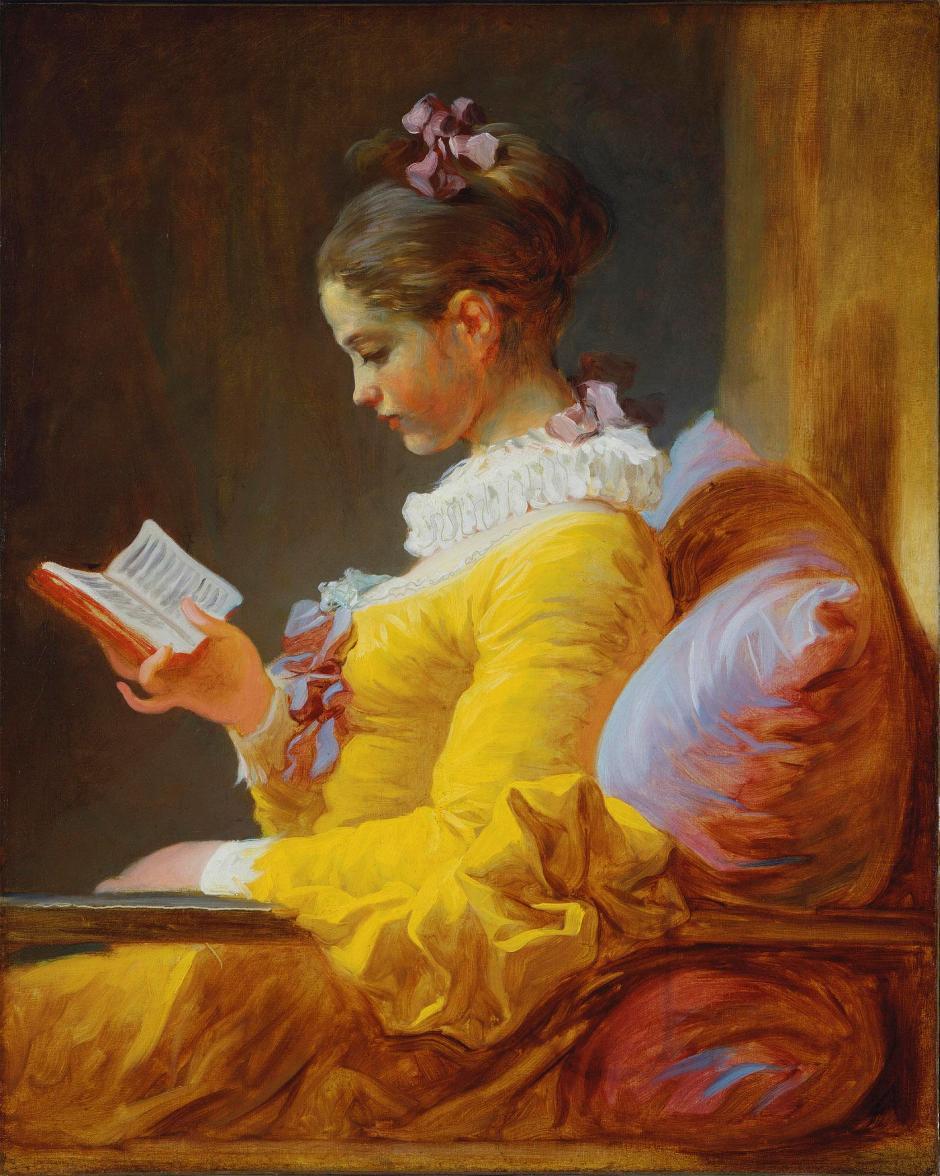
Jean-Honore Fragonard ~  The Reader

When it comes to Christmas presents ideas, a book is always a good option, if you know what to buy.
Recently, an acquaintance looking for a gift for his wife asked me for advice on "books for women", particularly classics like (and I quote) "Tess of the d'Uberville and Jane Eyre". 


Off the top of my head, I went through the usual list of Jane Austen and the Bronte Sisters and made a couple of suggestions on Russian literature (“Dr Zhivago”, “Anna Karenina”…), but was left a bit confused on what was meant, exactly.
 "Classics for women"? Classics are classics. 
Wouldn't a man enjoy reading "Pride and Prejudice"? Can't more modern classics like Virginia Woolf and Hemingway be loved by both sexes?
Perhaps it could be said that women tend to enjoy reading about people and relationships more than men, while men tend to enjoy books that are more factual, but they are  very broad generalizations.
Taste ultimately is individual. Women love a good thriller;  successful romantic books like "Love Story" and "One Day" were written by men and enjoyed by male and female readers alike. Terms like "women's fiction", "chic-lit" and "lad-lit" often include very similar types of books and genres are very blurred.
And yet, perceptions seem difficult to change.

As writers, we are told that putting our work in a clear genre is essential to help publishers with marketing our book. I placed my novel Playing On Cotton Clouds under the umbrella of "women's fiction" (though I also used the more general "contemporary fiction" tag) a term I’m not completely comfortable with. My book is for everyone, has both male and female characters as protagonists and has been enjoyed by both sexes. It has been compared to “One Day”, which, having been written by a man, was never categorized as “women’s fiction” despite including  very similar themes, so these kinds of distinctions seem a bit misleading.
Can we really think in terms of books "for men" and "for women"?


Monday, 19 November 2012

Dealing with Rejection


I recently came across a little rant a disappointed author left on a publisher’s Facebook page, after receiving a rejection from said publisher.

I fully understand how this author must have felt. I have been there several times and rejection is always hard to take. First reactions range from heartache and tears to self-doubt to rage and a desire to hit back. It’s normal to feel hurt and angry, and in every author’s right to vent frustration in the appropriate arenas. These include a solitary crying in your bedroom, a heart-to heart with a friend in a café, even a status update on your private Facebook profile.

On the other hand, angry emails back to the publisher/agent – you can write back to thank them for their feedback, if they have taken the time to send one, though – blogging about the incompetence of agents/publishers who reject your work, and most definitely leaving angry messages on a publisher’s public page are to be avoided at all costs.

Rejection is part of the course for any author. If you can’t take it, then don’t even start sending out your precious manuscript. It will hurt and it will make you want to hit back, but once you have calmed down, you can actually use rejection to your advantage.

Never think you are too good to learn something. Often there are very justifiable reasons behind rejections. We might think we have written the next big thing since Harry Potter, but the truth is that often we haven’t. Particularly first manuscripts are bound to be flawed. Many manuscripts are rejected because they are sent out too early, before they have been redrafted and properly edited.

So treat rejection not so much as a failure, but as an opportunity to improve.

I am not saying all this from the height of some arrogant wisdom, but from the humility of painful lessons learned.

My first novel, A Summer of Love, was a very lengthy affair. It had all the typical errors inexperienced authors make: no hook at the start to grab the reader’s (and agent/publisher’s) attention, too much telling, lack of an individual narrative voice. I had it edited by a couple of friends for typos and spelling mistakes and sent it on its way. Not surprisingly rejections kept coming. It was very disheartening and at times I really thought I was wasting my time. But I didn’t give up. In fact I did something better. I went back to drawing board. I wrote other stories, worked on my voice, learned from other writers. Eventually I went back to the novel and completely restructured the book, cut a lot of unnecessary background stories, used language more effectively, adopted a more personal style of writing.

Three years on, the novel has been rejuvenated and transformed into a much better piece of work and it will be published in January by Crooked Cat Publishing, who already published one of my novels.

Looking back, I am glad A Summer of Love received the rejections it did as the outcome was a better book, one I can be proud of.

Rejection can be the result of a poorly written book and certainly it is always worth taking another look at your work. That’s not to say you have to be too hard on yourself. There are times when a book could be a good book, but not the right book.

Always check the submission guidelines, explore what books agents represent, publishers release. There is no point sending your literary fiction masterpiece to a publisher specialised in commercial fiction. Do your homework and you will save a lot of time and heartache.

Sometimes a book might tick almost all the boxes and still get rejected. The exact same manuscript of my first published novel, PlayingOn Cotton Clouds, was accepted for publication by Crooked Cat, and rejected a few weeks earlier by another publisher that had liked the initial proposal, but said no after reading the full manuscript.

So, to sum up:

  • Rejection hurts and you have the right to feel angry, but be adult and professional about it. No one likes moody kids slamming doors.
  • Use rejection as a stepping stone to becoming a better writer, revise your work, don’t be afraid to make changes.
  • Remember that rejections can have many reasons, though, don’t think you are a failure and should stop kidding yourself you’re a writer.
  • Always research the agents/ publishers you are approaching with your proposal and make sure you are going to the right people.

When rejection comes, cry, dry your eyes and get back to work, but don’t give up, as every no is a step closer to that yes!


Wednesday, 10 October 2012

The Next Big Thing


I’ve been tagged by romance author Nancy Jardin to answer ten questions about my next release, which will be published in January. You can read about Nancy’s ‘Next Big Thing’ on her blog.

So, here are the ten questions and my answers, all about my new novel, A SUMMER OF LOVE.


What is the working title of your book? 
Working and definitive title are the same, A SUMMER OF LOVE

Where did the idea come from for the book? 
The story was born out of two previous pieces I started but never got round to finish. One was a dramatic coming of age tale, the other a love story where the heroine was torn between two very different men. I combined the two ideas and the result is A SUMMER OF LOVE.

What genre does your book fall under? 
Contemporary Fiction, Women’s Fiction, Romance.

Which actors would you choose to play your characters in a movie rendition? 
I don’t want to say. I have a very clear image of what my characters look like, but I want the readers to create their own images, rather than telling them whom I had in mind when I wrote the book. People who know me might have an idea of  whom is behind Jonah and Ewan, though.

What is the one-sentence synopsis of your book? 
In three sentences, the story follows Jonah and Sally, whose future didn’t quite shape out as they had imagined it when, at just eighteen, Jonah was sent to prison for two an a half years. Sally finds herself torn between Jonah and Ewan, the young Cornish farmer she has married. Over the course of eighteen years, meetings and partings, secrets and revelations, she will have to face the consequences of her choices and ultimately decide whether to follow her conscience or her heart.

Will your book be self-published or represented by an agency? 
It will be published in both digital and paperback format by indie publisher Crooked Cat Publishing, who already published my first novel, Playing On Cotton Clouds.

How long did it take you to write the first draft of your manuscript? 
The first draft took about six months. But it has undergone a lot of editing since.

What other books would you compare this story to within your genre? 
It’s a good old fashion love story, a little remindful of Rosamunde Pilcher or Maeve Binchy, but it has modern, contemporary settings and language, closer to people like Lisa Jewell.

Who or what inspired you to write this book? 
At the time I was reading a story that included a look at the so called Second Summer of Love, in the late 80s. My book is built around an event that takes place during the dance scene of 1988, an event that will spawn what follows.

What else about your book might pique the reader’s interest? 
It’s a heart-warming story, which explores different relationships – families, friends, lovers, spouses – and issues, from drugs to domestic violence to parenthood. The central theme is “forgiveness”. There’s quite a rich tapestry of characters and emotions and I think everyone will find at least one character they will identify with. 


A SUMMER OF LOVE will be published in January by Crooked Cat. 
Watch this space! 


Next Wednesday, some other writers or creative people will tell you about their ‘Next Big Thing’, including: David W Robinson, Jeff Gardiner and Sarah Logan.